



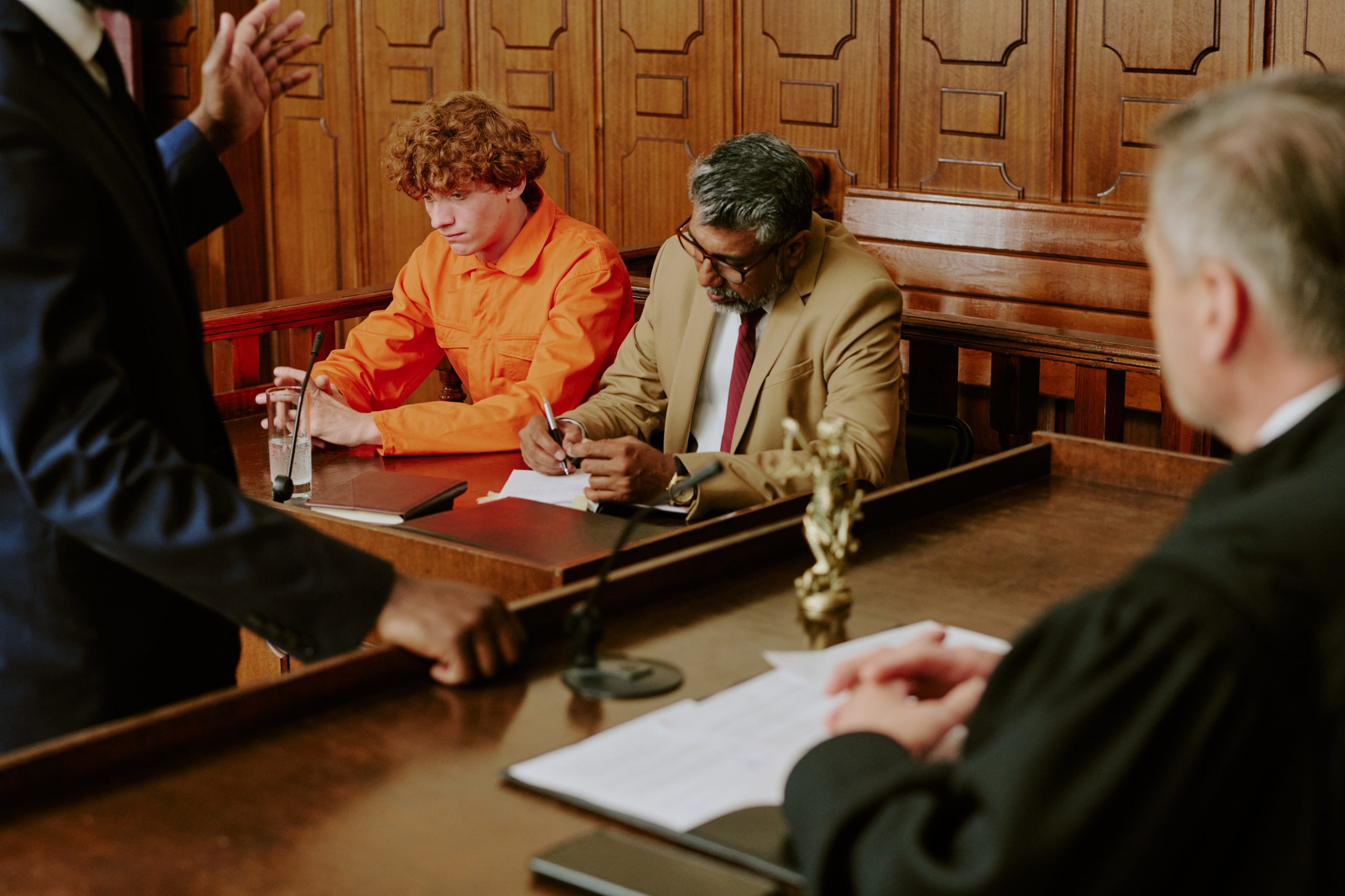
29 Apr Miami Criminal Defense Attorneys: How Cases Move from Arrest to Court
Getting arrested is disorienting in a way nobody is prepared for. One minute you’re going about your day, the next you’re in the back of a cruiser, and the court system you’re about to walk into looks nothing like what you’ve seen on TV.
The good news is that Florida’s criminal justice system follows a predictable sequence. Every case, felony or misdemeanor, moves through the same set of stages. If you’re charged with a crime in Miami-Dade, understanding those stages, and where a criminal defense lawyer actually changes the outcome, is the difference between reacting to what happens to you and getting ahead of it.
The Law Office of Manuel Gonzalez, Jr., P.A. has handled several thousand criminal defense cases since Manny opened the firm in 1985. His practice covers both state and federal courts, from DUI and misdemeanor matters up to complex federal prosecutions. This article walks through what actually happens at each stage of a criminal case in Miami, and where the right attorney makes the biggest difference.
 The Arrest Itself
The dramatic version is what most people imagine. Flashing lights, handcuffs, Miranda rights read out like a TV scene. Reality is less cinematic. Police in Miami-Dade County can make an arrest if they witness a crime, have an active warrant, or have probable cause to believe you committed a criminal offense.
A few things to know right out of the gate. You have the right to an attorney, and you should exercise that right immediately. Not after you have explained yourself. Not after you have tried to clear things up. Immediately. Talking to a prosecutor or police without a criminal lawyer present is the single most common way people make a bad situation worse. Prosecutors build cases on what suspects say in the heat of the moment, and most of those statements could have been avoided.
First Appearance: Within 24 Hours
If you are arrested and unable to post bond, Florida law requires that you appear before a judge within 24 hours. It is written into Rule 3.130 of the Florida Rules of Criminal Procedure, and judges do not ignore it. In Miami-Dade, first appearance hearings happen every day of the week, including weekends and holidays, at the Richard E. Gerstein Justice Building.
At first appearance, a few things happen quickly. The judge tells you what you are being charged with, advises you of your rights, including the right to legal representation, reviews the law enforcement reports, and decides whether you are eligible for bail. If bail is set, the judge decides the amount.
This is the first real chance to have a Miami criminal defense attorney on your side, and it matters. A defense lawyer at first appearance can argue for a reduced bond, challenge whether there’s even probable cause to hold you, or, in some cases, secure release on your own recognizance. Manny Gonzalez has represented clients at first-appearance hearings in Miami-Dade County for four decades. Without a criminal lawyer at this stage, you’re stuck with whatever the judge decides, with no one arguing your side of the story.
The Filing Decision
Here’s something many people don’t realize. Being arrested doesn’t mean you’ve been formally charged. Not yet.
After the arrest, the case goes to the state attorney’s office, or to federal criminal prosecutors if the matter falls under federal jurisdiction. An assistant state attorney for Miami-Dade reviews the police report, interviews witnesses where needed, and decides whether to actually file charges. They may file charges from the arrest report, additional charges you weren’t even arrested for, or occasionally decline to file anything.
That window, between arrest and formal filing, is critical. A criminal defense lawyer who contacts the prosecutor before formal filing can sometimes change the trajectory of the case. Prosecutors have discretion, and they weigh the strength of the evidence, the defendant’s background, and their office’s priorities. A lawyer like Manny, who has worked with Miami-Dade prosecutors since the mid-1980s, knows which cases are worth pushing on at this stage and how to frame that conversation.
Arraignment
If charges are filed, the arraignment is the next formal court appearance, usually two to four weeks after the arrest.
At arraignment, the judge reads the formal charges and asks you to enter a plea: guilty, not guilty, or no contest. For most felony cases in the state of Florida, the answer is almost always “not guilty,” even if you think you might want to plead differently down the line. Pleading guilty at arraignment before your criminal defense team has seen the evidence is a mistake. You give up leverage you might otherwise have had.
For misdemeanor arraignments, things can move faster. A judge may accept a plea on the spot and proceed to sentencing. Even then, you generally want a criminal attorney with you before you make that call.
One small piece of good news: if you’ve already hired a criminal defense lawyer, in most cases, your lawyer can waive your appearance. One less day off work, one less trip downtown.
Discovery and Pretrial Motions in Miami-Dade County
Now the actual work begins. After a not-guilty plea is entered, the case moves into discovery. In plain English, this is the part where both sides get to view the evidence.
The prosecution must disclose virtually everything they have. Witness lists, police reports, anything the defendant allegedly said, physical evidence, forensic evidence, audio or video. A criminal defense lawyer goes through each page looking for weaknesses in the state’s case, procedural errors, improperly obtained evidence, witnesses who might not hold up, and technical flaws with the charging document. Anything that can be used to fight the charges or bargain for a better outcome.
Depending on the severity of the criminal case, discovery can take a few months or more than a year. A Medicare fraud or PPP fraud case with thousands of pages of financial records can easily extend beyond a year.
Pretrial motions go hand in hand with discovery. The three most common in criminal defense work:
- Motion to suppress evidence. If police searched you, your car, or your home without a valid warrant, or obtained a confession in violation of your rights, a motion to suppress asks the court to suppress that evidence. A successful suppression motion can gut the prosecution’s case.
- Motion to dismiss. If the charging document is legally insufficient or the state doesn’t have the evidence to sustain the charges, the defense can move to dismiss the whole case.
- Motion for change of venue. Uncommon, but occasionally necessary when a case has drawn so much local publicity that seating a fair jury in the county isn’t realistic.
All of these can significantly shift the course of a criminal case. In Miami, experienced criminal defense attorneys spend as much time on motions as they do on trial.
Plea Negotiations
Most criminal cases in Florida don’t go to trial. The Bureau of Justice Statistics estimates that more than 90 percent of federal cases are resolved by plea agreement, and state figures follow suit. That’s not because defense attorneys are rolling over. It’s because plea bargaining, when properly done, can yield a far better outcome than taking a weak case to trial and losing.
A plea deal can take a lot of forms. Lower charges. Reduced sentence. First-time offender diversion programs. Agreement to withhold adjudication, which in Florida means avoiding a formal criminal conviction on your record even if you plead. What gets negotiated depends on the evidence, the defendant’s criminal record, the prosecutor assigned, and the reputation and expertise of the criminal defense attorney at the table.
This is why experience matters so much in criminal defense. A trial lawyer who has handled thousands of cases knows which prosecutors tend to negotiate, which charges have soft spots, and which defense strategies have worked before. There’s no shortcut for that kind of knowledge.
Criminal Law Trial
If no plea bargain is reached, the case proceeds to trial. In Florida, this means a jury trial in most felony matters, or occasionally a bench trial where the judge alone decides the case.
A trial is a big deal. Both in stakes and in preparation. A criminal trial attorney has to construct a narrative, anticipate the prosecutor’s moves, prepare cross-examinations, handle jury selection, and present a defense that holds together from opening to closing. Trials may take a day for simple misdemeanors or several months for complex federal criminal cases with multiple defendants.
Going to trial makes sense in some situations and not in others. When the evidence is weak, when the state has overcharged, when the plea offer is unreasonable given the facts, a trial is the move. That’s a call the defendant makes with the criminal defense team.
After Verdict: Sentencing and Appeals
The case is terminated by a not-guilty verdict. You walk out. No fines, no probation, no criminal conviction.
A guilty verdict proceeds to sentencing, usually a few weeks after. The judge takes into account the crime, criminal history of the defendant, defendant and family statements, victim impact statements, and any mitigating circumstances that the defense can offer. Sentencing in Florida is based on the state sentencing guidelines, but there is a significant scope of advocacy. An effective criminal defense lawyer works hard during the sentencing process, as years may be the difference between a competent and a perfunctory presentation.
Sentencing is followed by the appeals process, in case there are grounds. Appeals are their own specialty, concerned with whether legal mistakes occurred in the course of proceedings that affected the outcome.
 Why an Experienced Criminal Defense Law Firm Matters
A Florida criminal case may take as long as 12 to 18 months, or even longer, from arrest to resolution. The choices made at each level influence the end result. Choice of plea at arraignment. Filed and unfiled motions. Readiness to stand trial or negotiate a plea. The manner in which the sentencing hearing is conducted. Each one matters.
The finest Miami criminal defense attorneys develop their reputation on a case-by-case basis. They are familiar with the courtrooms, the prosecutors, and which fact patterns are granted a motion to suppress by which judge. Such local knowledge, combined with decades of experience dealing with the entire gamut of criminal charges in Miami, is what makes the difference between legal representation that moves the needle and legal representation that goes through the motions.
Manny has practiced at both the state and federal levels since 1985. He’s admitted to the United States District Court for the Southern and Middle Districts of Florida and the Eleventh Circuit Court of Appeals, and he personally handles each client’s representation rather than passing cases off.
If you’ve been arrested or are under investigation in Miami-Dade County, the most important step you can take right now is to talk to a criminal defense attorney before answering any more questions. The Law Office of Manuel Gonzalez, Jr., P.A. offers a free consultation. Manny’s practice covers narcotics and drug crimes, white collar crimes, healthcare crimes, DUI defense, domestic violence, and federal investigations, among other matters. Whatever the charges, getting an experienced Miami criminal defense attorney involved early gives you the best chance at the best possible outcome.
No Comments